3 of 6
SkillItUp
Hired for what you can do, not what’s on paper.
- Role
- Built and owned by me
- Status
- Live, my own product
- Platform
- Web platform at skillitup.tech
In short
- Who it’s for
- A skilled or aspiring blue-collar worker in India whose ability isn’t visible on paper.
- What was hard
- Learning a skill doesn’t turn into proof, and proof doesn’t turn into a job. Employers can’t tell who is genuinely skilled.
- What I decided
- Build around proof: assessments and certifications that employers can trust, connected directly to jobs.
Everyone was talking about jobs AI would take. I kept thinking about the people nobody was talking to.
One evening I was watching an interview with Jensen Huang, the CEO of NVIDIA. He was talking about how AI would change white-collar work, and how skilled, hands-on work would still be needed.
Everyone around me heard a warning about office jobs. I heard something else. If skilled hands were going to matter more than ever, what about the millions of people who do that work and have never been given a fair chance to become skilled?
Where I come from, almost every family I know has someone working far from home, in hard jobs, often with no training and no way to prove what they can do. I looked for products built genuinely for them, and found very few.
So I started building one.
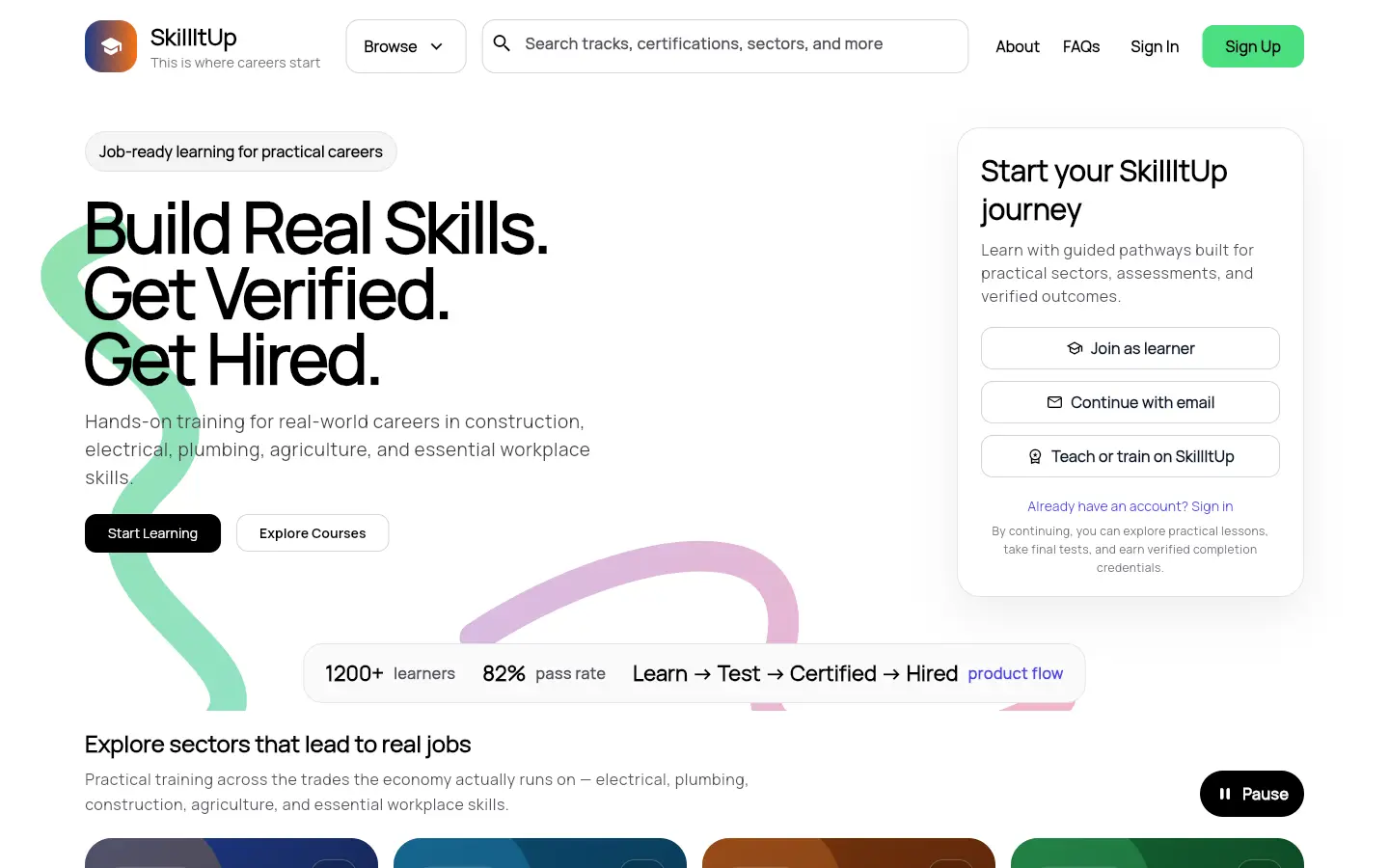
SkillItUp is a place where a worker can learn a skill, prove it through assessments and certifications, and get hired for what they can actually do, not for what’s on a resume they may not even have.
Building it wasn’t the hardest part. Believing in it was. Nobody wanted to invest. It was easy to read that as a verdict on the idea, and on me. I kept going anyway, because I believed in the world on the other side of it: one where a skilled worker earns a decent living, and the gap between the people who have opportunities and the people who don’t gets a little smaller.
Today SkillItUp is live, and it’s entirely mine. More than anything, it taught me that I could take something that existed only in my head and make it real.
“Building it wasn’t the hardest part. Believing in it was.”
What I learned
The hardest part was believing in it when nobody else would invest. Making it real anyway gave me my confidence.