The full story
A 8-minute read, from the first idea to what I’m building now.
Plenty of ideas, kept quietly to myself.
I grew up in the kind of place where big ideas usually stay ideas.
I had plenty of them as a kid. I’d imagine ways the world could work better, in big ways and small ones. But I kept most of them to myself. For a long time I didn’t believe I was the kind of person who actually builds things, and that quiet doubt followed me well into my second year of college.
“For a long time I didn’t believe I was the kind of person who actually builds things.”
Everyone was talking about jobs AI would take. I kept thinking about the people nobody was talking to.
One evening I was watching an interview with Jensen Huang, the CEO of NVIDIA. He was talking about how AI would change white-collar work, and how skilled, hands-on work would still be needed.
Everyone around me heard a warning about office jobs. I heard something else. If skilled hands were going to matter more than ever, what about the millions of people who do that work and have never been given a fair chance to become skilled?
Where I come from, almost every family I know has someone working far from home, in hard jobs, often with no training and no way to prove what they can do. I looked for products built genuinely for them, and found very few.
So I started building one.
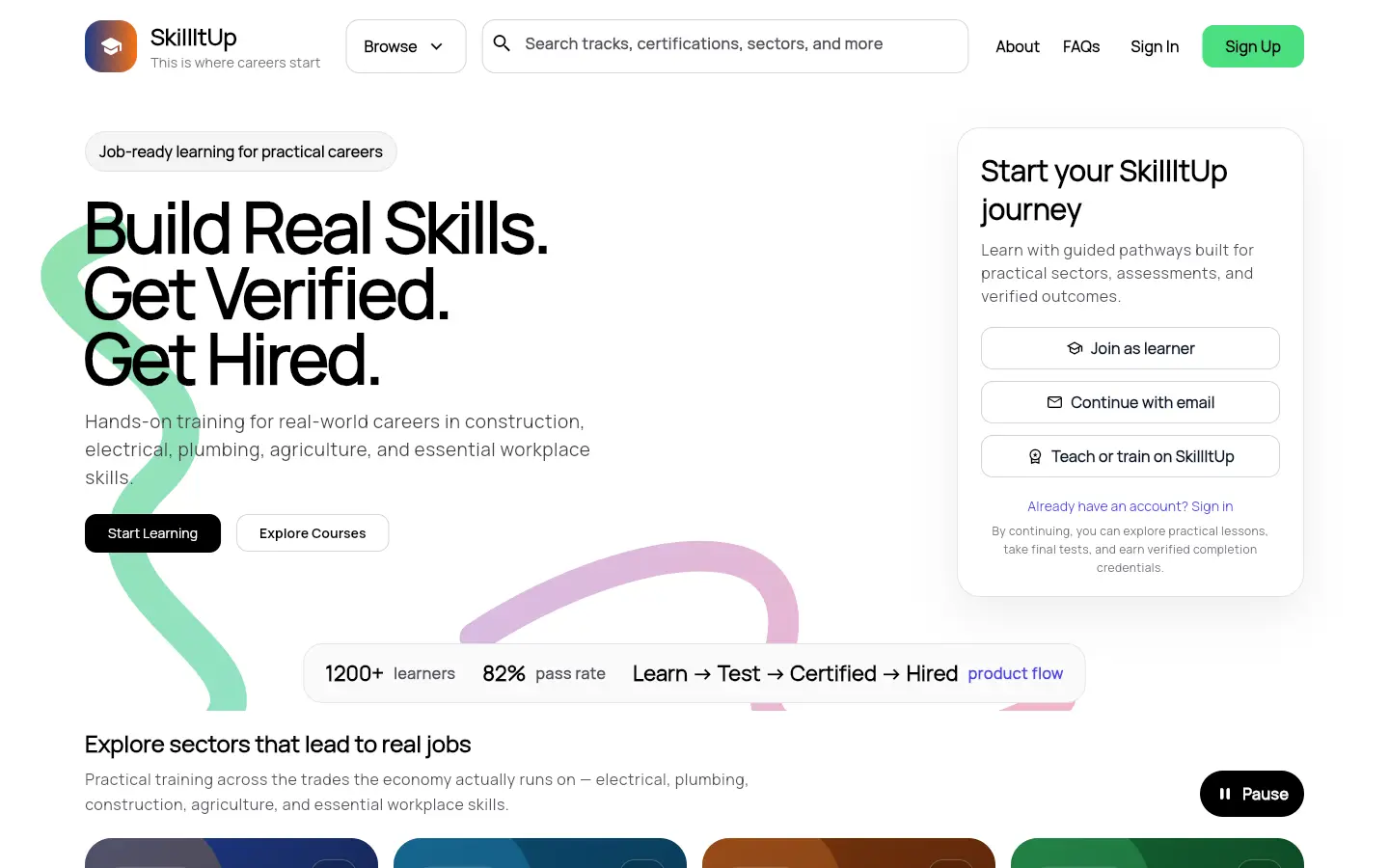
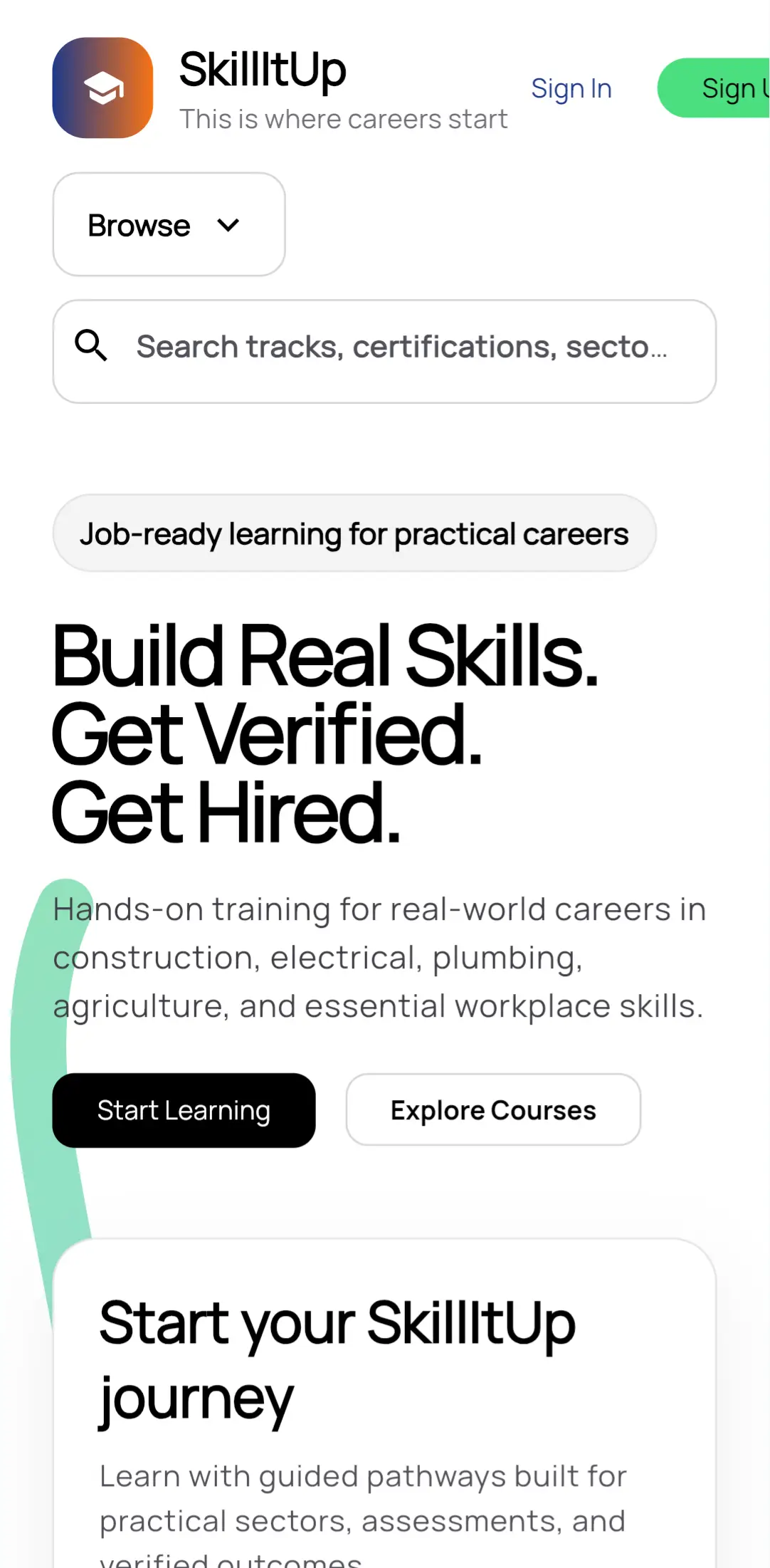
SkillItUp is a place where a worker can learn a skill, prove it through assessments and certifications, and get hired for what they can actually do, not for what’s on a resume they may not even have.
Building it wasn’t the hardest part. Believing in it was. Nobody wanted to invest. It was easy to read that as a verdict on the idea, and on me. I kept going anyway, because I believed in the world on the other side of it: one where a skilled worker earns a decent living, and the gap between the people who have opportunities and the people who don’t gets a little smaller.
Today SkillItUp is live, and it’s entirely mine. More than anything, it taught me that I could take something that existed only in my head and make it real.
“Building it wasn’t the hardest part. Believing in it was.”
Someone else’s idea. My job to make it real.
After SkillItUp, I found the work I love most: taking someone else’s idea, sometimes just a conversation or a dream they’ve carried for years, understanding the people it’s for, and turning it into a product they rely on.
Someone had carried this dream for years. They handed it to me.
My first client ran a warehouse and a delivery company. They had been imagining the same thing for years: one platform that could run their whole operation, which they could one day offer to other businesses like theirs.
They were ambitious about it, and they had a clear picture of what it should become. What they didn’t have was someone to build it.
I had no client history and no portfolio of finished SaaS products. On paper, I was a risky choice for something this big. They trusted me anyway.
I didn’t take that lightly. When someone gives you an idea they’ve been carrying for years, you’re not just writing code. You’re responsible for whether their dream survives contact with reality.
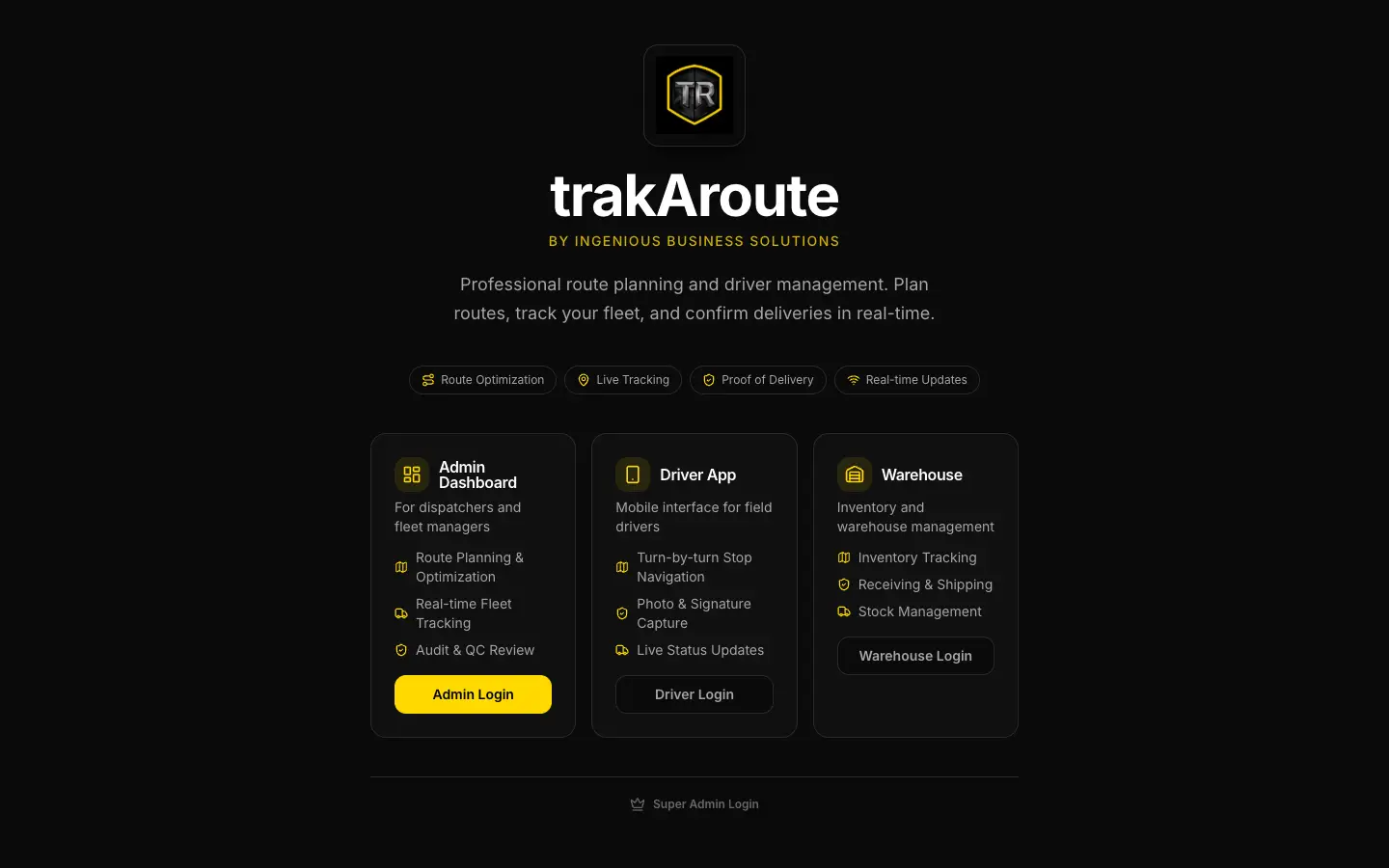
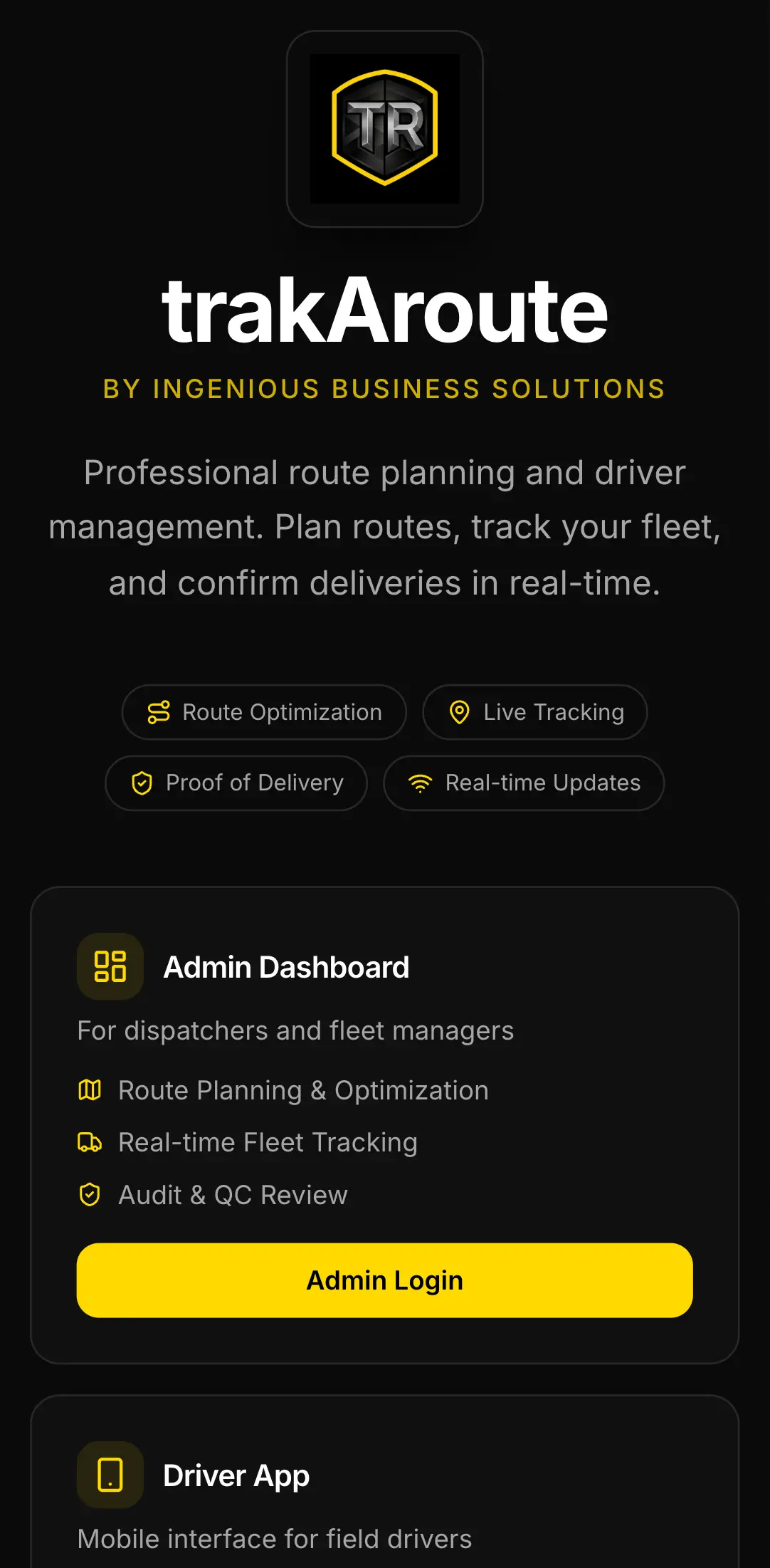
So I built it, alone, piece by piece. Dispatch and the warehouse in one system, so nothing fell between tools. A web app for the office. Separate apps for admins and for drivers on the road. Billing, compliance, live updates, and AI to help plan routes. Every part had to work for a real business, on real days, with real deliveries depending on it.
Today TrakaRoute runs in production. The platform they had pictured for years exists, and their business runs on it.
That project changed something in me. SkillItUp proved I could make my own idea real. TrakaRoute proved I could be trusted with someone else’s.
“SkillItUp proved I could make my own idea real. TrakaRoute proved I could be trusted with someone else’s.”
Pet parents carry a lot in their heads. This app carries it for them.
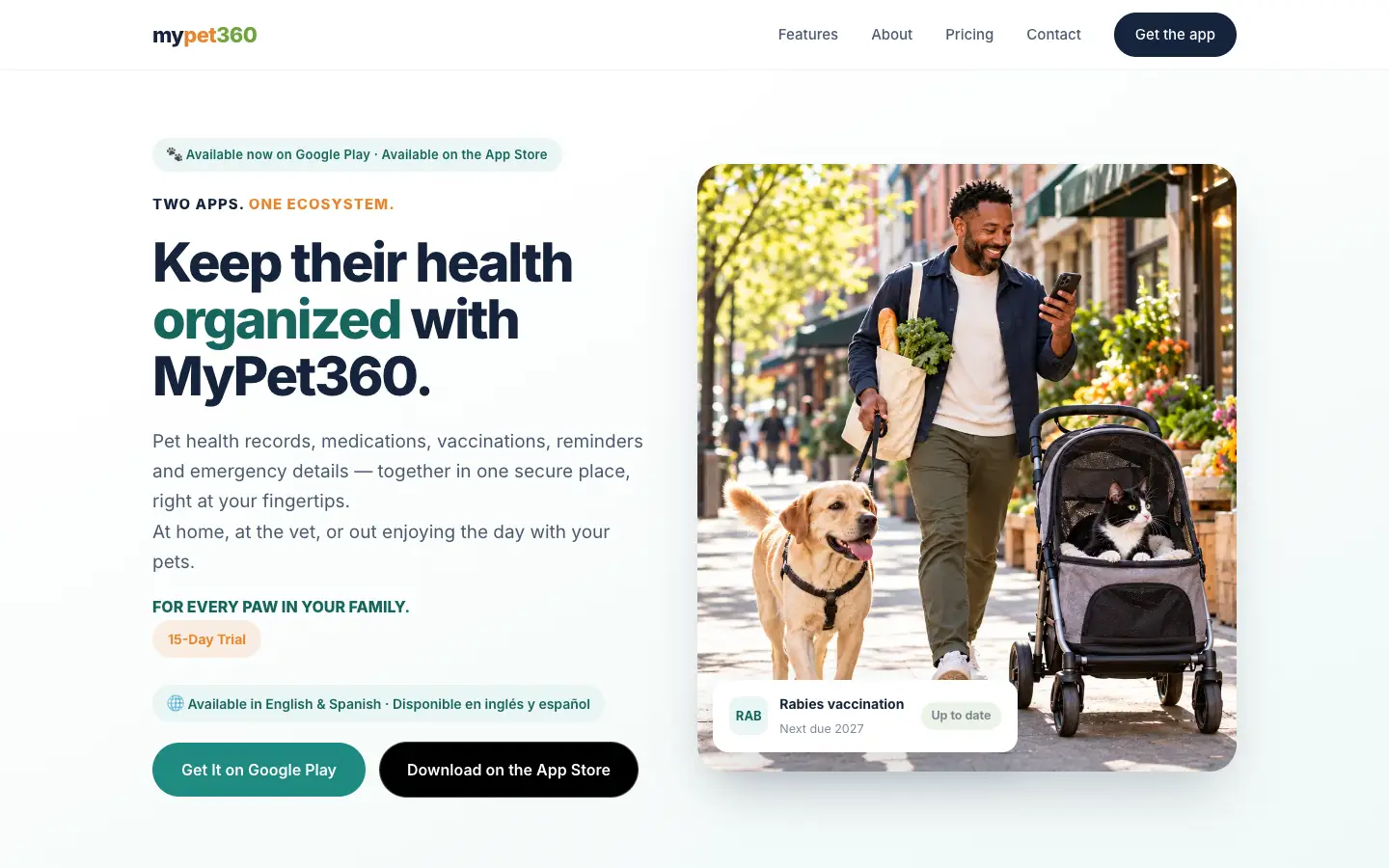
Pet parents carry a surprising amount in their heads: vaccination dates, medicines, vet visits, and papers scattered across drawers and chats. It’s all fine until the moment it suddenly matters. My client wanted every pet parent to have all of it in one place, organised, safe, and there when they need it most.
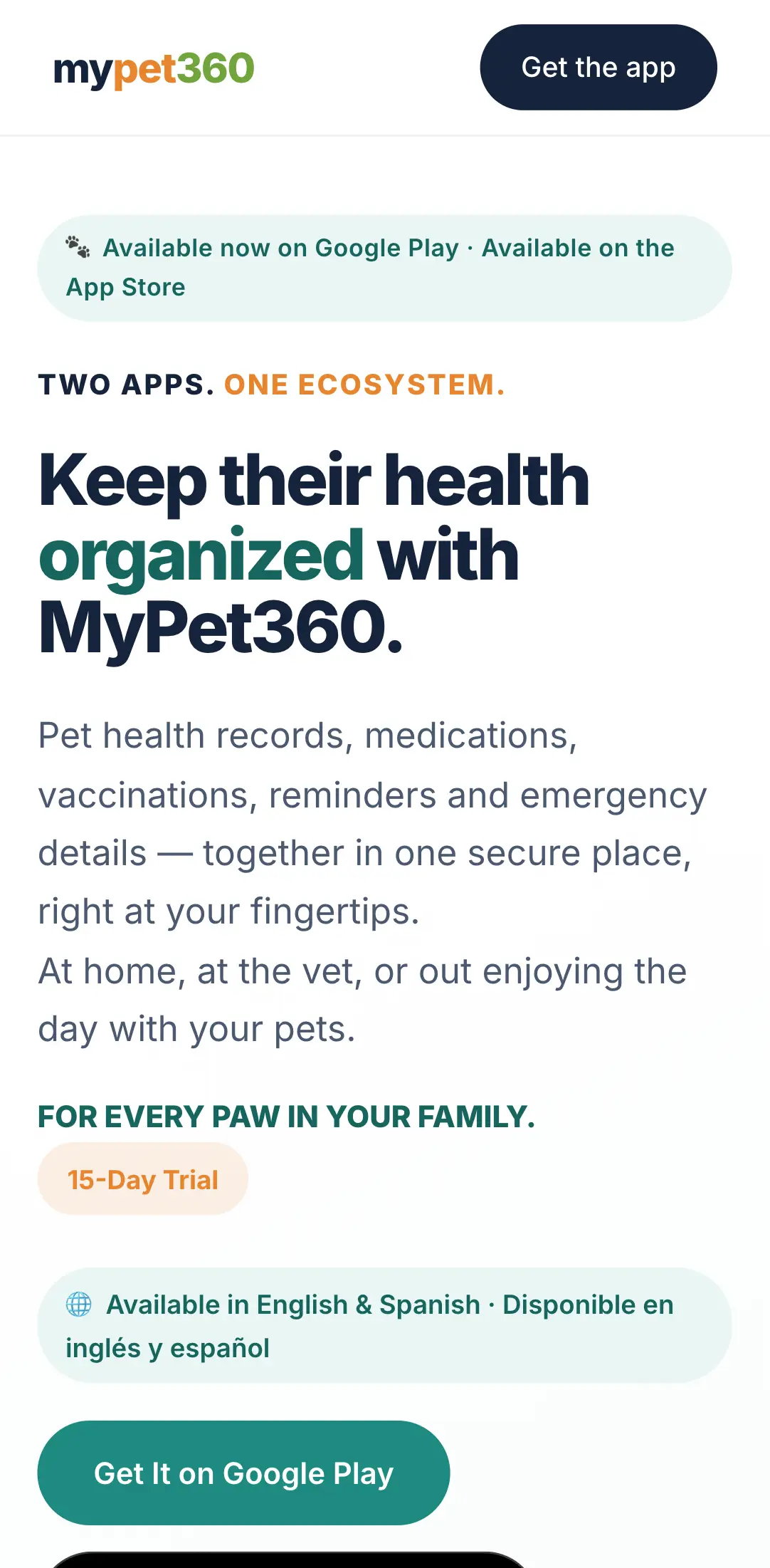
She brought that idea to me, and every decision came from it. Emergency information is reachable in seconds, because the worst moments are when you can least afford to search. Family members and pet sitters can be given access, because pets are rarely cared for by one person alone. Reminders do the remembering, so love doesn’t depend on memory.
MyPet360 keeps a pet’s whole life (health records, vaccinations, medications, vet visits, documents, daily care) in one calm place.
I’ve built many apps. This is the one that taught me most clearly that behind every product is a person.
“Reminders do the remembering, so love doesn’t depend on memory.”
One founder. Dozens of ideas. Most of the apps, built by me.
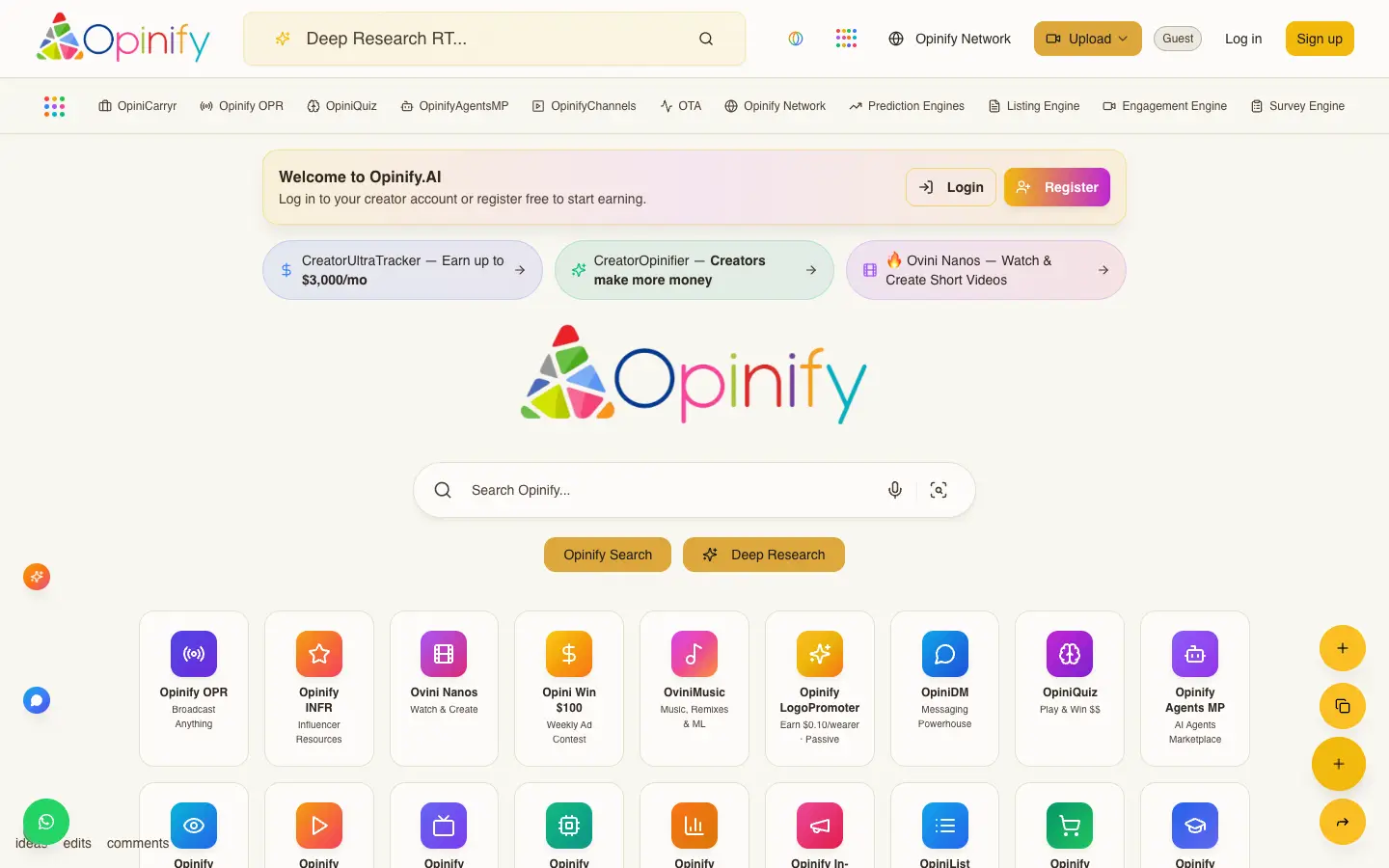
Some founders have one idea. The founder of Opinify had dozens, and he wanted to build all of them.
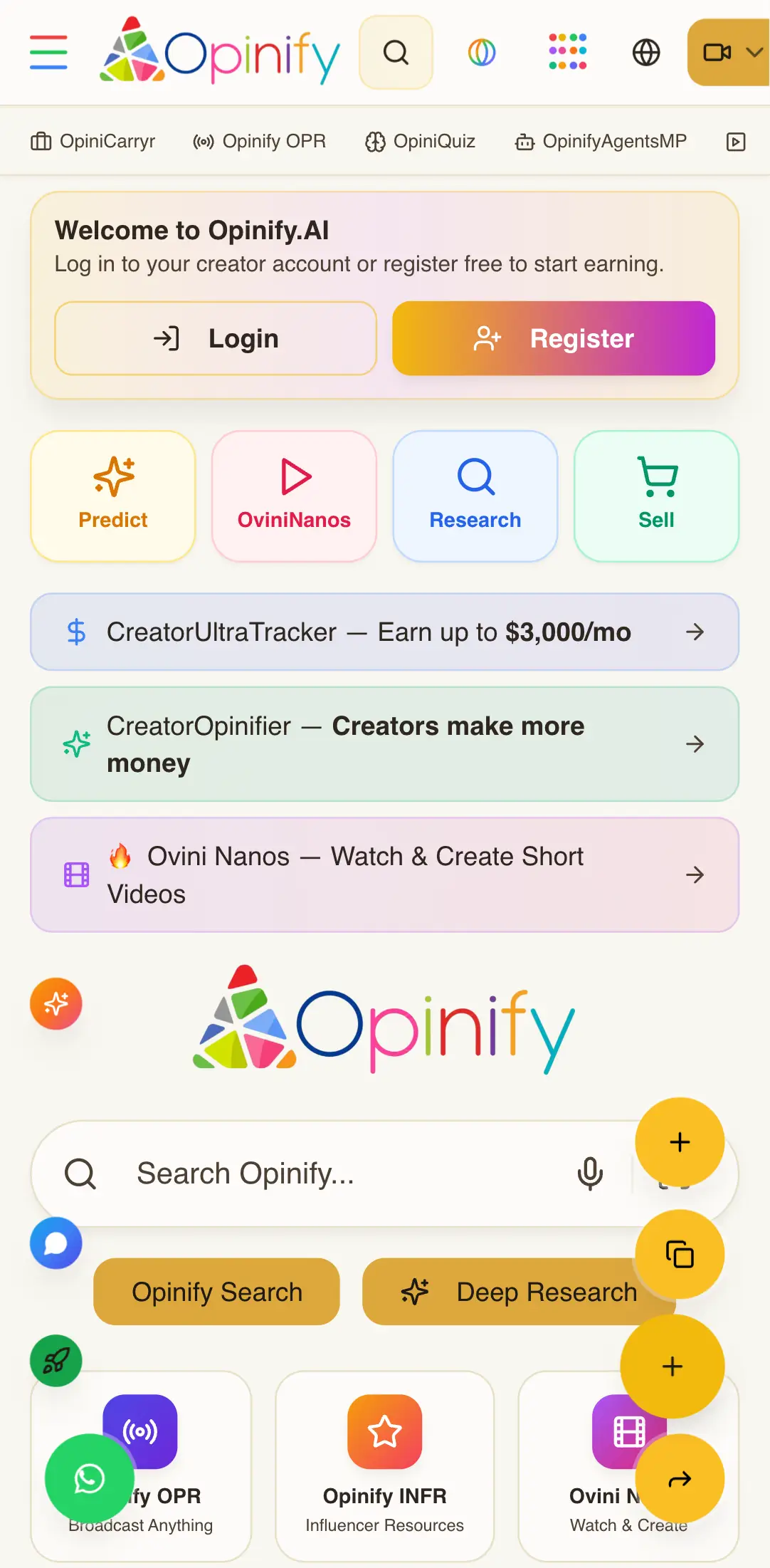
His vision was an entire ecosystem under one name: AI that makes predictions and does deep research, short-video feeds, messaging, quizzes, a marketplace for creators, and ways for ordinary people to earn from what they make and share. More than thirty products, all connected by one idea: putting AI and opportunity in everyday people’s hands.
A vision that big needs builders, many apps across Android and iOS. He could have spread that work across a large team. Instead, he trusted me with most of it.
That trust came with a different kind of challenge. TrakaRoute taught me to go deep into one product. Opinify taught me to go wide: to move between very different apps, keep each one solid, and still make them feel like they belonged to the same family.
Working with a founder like him also taught me something about vision. Big ideas don’t become real all at once. They become real one shipped app at a time.
“Big ideas don’t become real all at once. They become real one shipped app at a time.”
The person who once taught in my school is now the person I’m building with.
In 2020, Shariq Khaleel came to my school to run a workshop. I was one of the students in the room.
I didn’t know then that it was the start of something. He became my mentor, and we stayed in touch as I taught myself to build software. Over the years, the student in the audience slowly became someone who could build what he imagined.
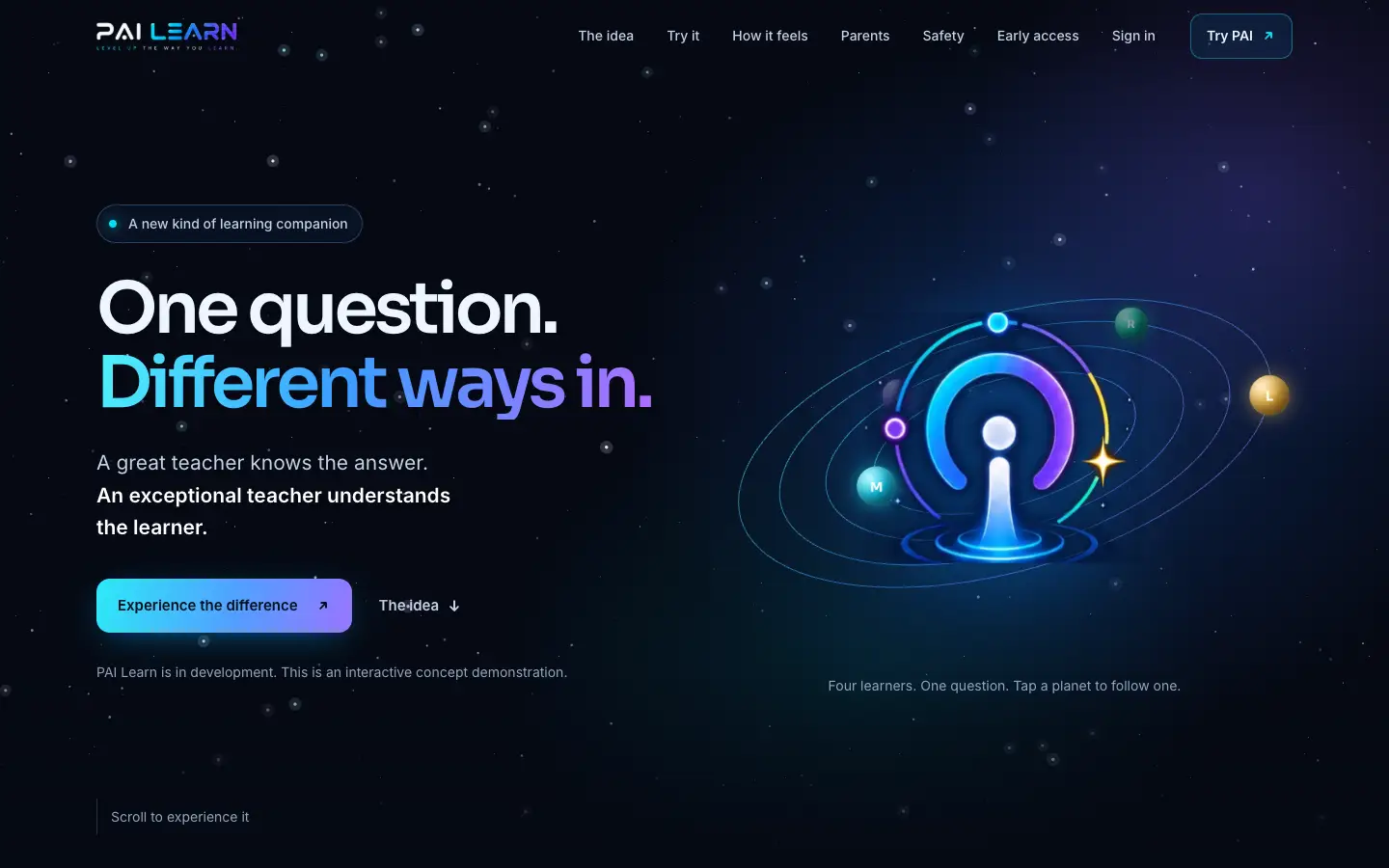
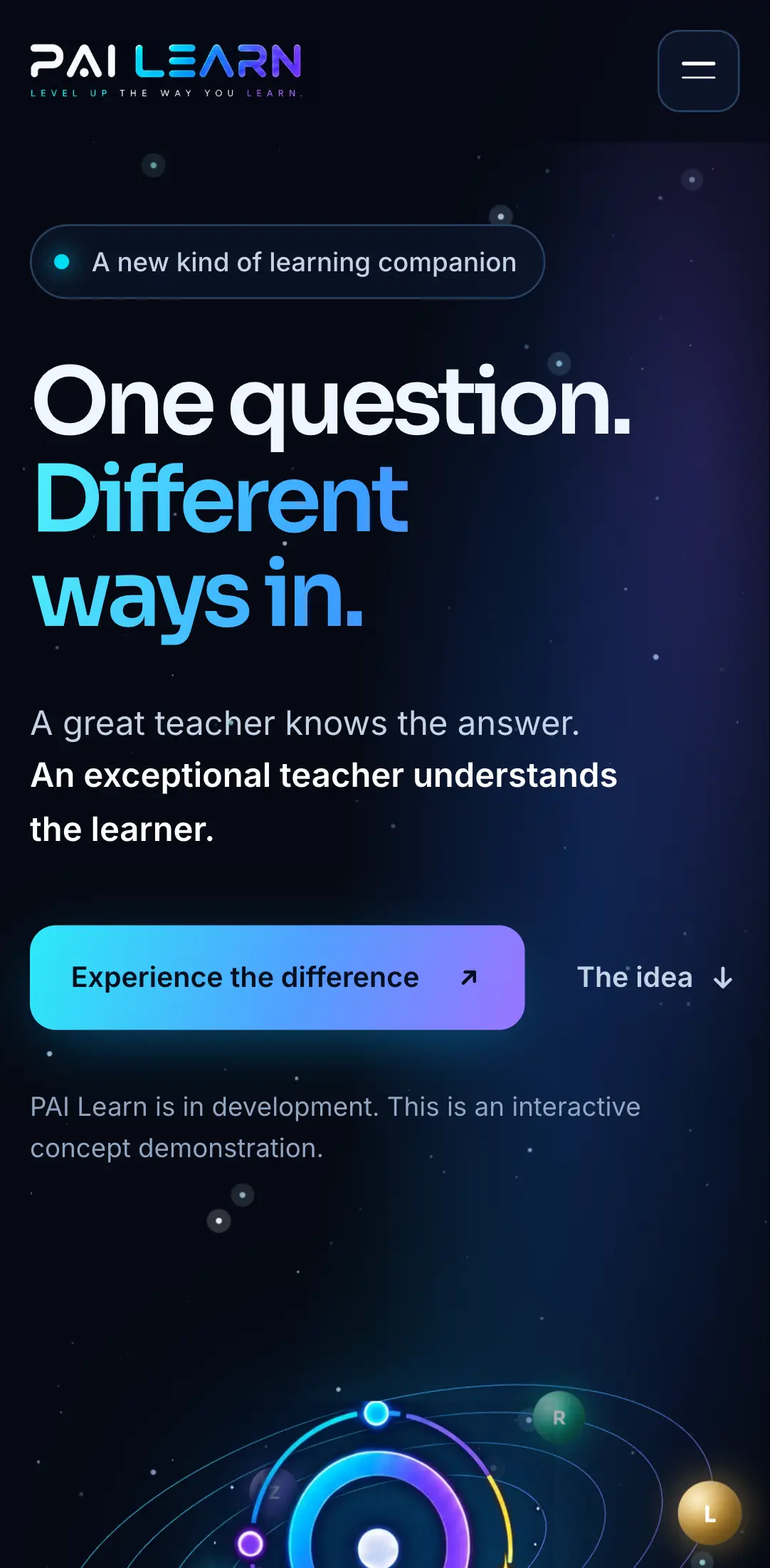
In 2026, we started PAI Learn together. Shariq leads education and product. I lead the engineering: the AI architecture and the code, from how PAI reads a child’s message to how it decides what to do next.
The idea comes from Shariq’s work with more than 1,000 children, through over 100 hands-on workshops. He kept seeing the same thing: a child would look unable to learn something, and then make progress the moment the explanation, the pace or the activity changed. The hard part was never explaining. It was working out which change that child needed.
So PAI is designed to understand a learner before it teaches them. We’re starting narrow, with maths for 14 to 16 year olds preparing for IGCSE, and building toward younger, curious children. When a child says “I don’t understand fractions,” one child might think 1/4 is bigger than 1/3 because 4 is bigger than 3. Another might understand perfectly and just need more time. PAI asks first, makes a careful guess, watches what happens, and changes course if it got the child wrong.
Building that safely is my job. PAI isn’t a chatbot let loose on children. A rules engine decides what kind of help comes next: a prompt, a hint, a stronger hint, or a fresh explanation. The AI writes only within those limits, and a second model checks every reply before a child sees it, so it never simply hands over the answer. Maths answers are marked by exact arithmetic, not by the AI. It’s tested by more than 850 automated checks, and by red-team tests that actively try to make it fail.
We’re honest about where we are: PAI Learn is in development and hasn’t launched yet. We’re preparing our first pilot: putting the first version in front of a small group of learners, with their parents’ permission, to find out whether it really helps.
There’s something I find quietly remarkable about this one. The person who once stood in front of my class is now the person I’m building a company with.
“PAI isn’t a chatbot let loose on children.”
Most people don’t hate work. They’ve outgrown it.
There are millions of people who go to work every day feeling tired, stuck, and quietly unhappy. Not because they’re lazy, and not because they lack ability. They’ve simply outgrown the work they’re in, and they can’t see a way out.
When they look for help, what they find is job boards: endless lists of openings, most of them variations of the job they already want to leave. But stuck people aren’t short of listings. They’re short of a believable next step. What else could someone like me actually do? What would it take to get there?
That’s the question I’m building for.
The platform works as one journey in two parts.
First: where could I go? It reads the skills you already have and maps them against 927 occupations and 258 skills, built from more than 96,000 records of real job data. Then it shows realistic roles you could move into, and exactly which gaps you’d need to close. Not fantasy careers. Real paths that start from who you are today.
Then: how do I get there? It finds openings that genuinely fit, scores each one honestly, flags what’s missing, and helps you prepare a strong application for each. It will never apply on your behalf. Mass applications are a big part of what makes job hunting feel hopeless, for candidates and companies alike. This platform is built for fewer, better choices.
I’ve designed it to keep working even when things go wrong. If one AI service fails, it falls back to the next, and then to a simple built-in template, so nobody gets stranded halfway through a decision about their life.
Looking back, I realise this isn’t a new mission. SkillItUp was about helping skilled workers prove what they can do and find work that values it. This platform is about helping people who feel stuck find work that fits who they’ve become. Years apart, it’s the same idea: helping people get from where they are to work that’s right for them.
That’s where I’m going.
- occupations
- 927
- skills
- 258
- O*NET records
- 96,000+
“Stuck people aren’t short of listings. They’re short of a believable next step.”